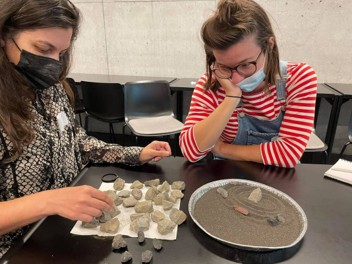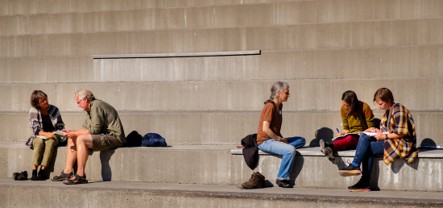
The TECTU Summer School 2026, Aarhus
June 14th – 19th, 2026
“Embodied Critical Thinking and Understanding” approaches critical thinking and understanding as a creative, eye-opening kind of experience that involves courage as much as empathy. The TECTU approach comes about by a) careful attention to and exploration of lived experience, b) by a discerning use of language that makes a difference to the topic and the person engaged in thinking; c) attentive and generous listening to grant one another the freedom to say what one actually means and to make sense of complex topic; c) a skill to explore one’s own bias and helpful perspectives by becoming more aware of the experiential backgrounds partaking in one’s approach.
The novel concept of critical understanding will be explored in interdisciplinary ways, applied on one’s own research projects, and enacted with embodied-experiential research practices that motivate trainees to deeply engage with each other, and with the rich and diverse backgrounds they bring along. Trainees will learn the skill needed to come into fruitful contact with their own lived experience of relevant issues of research, and of today’s challenging problems.
TECTU 2026 will have a special focus on uncertainty. We live in uncertain times. The consequences of past and current political decisions and events make the future increasingly unforeseeable, even in the most privileged parts of the world and society. Misinformation and fake news are spread via the most trusted channels and voices and the amount of bad news has become so big that many of us, who still can, have chosen active breaks from any information source in a last attempt to protect our mental health. Unfortunately, the past and presence has also told us that uncertainty makes humankind crave for authoritarian voices pretending to hold an unchangeable truth under most confusing circumstances. It’s the time dictators thrive and those who remind about the contextuality (situatedness) of all knowledge are even less listened to.With TECTU we want to offer a different space, reminding ourselves of the critical power that uncertainty can carry. Rather than managing, suppressing or freaking out about uncertainty, we offer theoretical frameworks and empirical, analytical and creative tools to move and develop with it, always holding in mind, that our perspective is just one out of many, that we can never be certain, but that articulating what is not clear, steady and true as such can move us further – and possibly closer to each other.
The summer school (hosted by Aarhus University, Denmark) will offer a lot of practice opportunities to gain know-how of the TECTU methods, and for critical discussions on their scientific foundations. Methods that will be deepened at the summer school are: Micro-phenomenology; Thinking at the Edge; Neurophenomenology; and Environmental Immersion.
In this summer school, students/researchers will be introduced to methods of embodied critical thinking that were developed at the University of Chicago, at the Technion in Haifa, at the University of Iceland and at the Micro-phenomenology Laboratory in Paris and the University of St. Gallen. With these methods, students and researchers learn to unfold and think with the thickness of their actual experiences and situations. This novel combination of critical thinking in philosophy and in design makes theories of the embedded, extended and enactive mind concretely applicable in the thinking process, with far-reaching implications for training a differentiated, creative and critical approach to frame problems and solutions and initiate projects.
The summer school is set at Danakilde in rural Denmark, within a landscape formed by the slow movements of glaciers during the Ice Age. This venue provides a space for noticing uncertainty within the seemingly idyllic, and for understanding how moving with uncertainty – and moving together – affects our way of thinking, challenges habitual approaches and enriches conceptual patterns.
The TECTU Summer School 2025, Bielefeld
July 7th – 11th, 2025
“Embodied Critical Thinking and Understanding” approaches critical thinking and understanding as a creative, eye-opening kind of experience that involves courage as much as empathy. The TECTU approach comes about by a) careful attention to and exploration of lived experience, b) by a discerning use of language that makes a difference to the topic and the person engaged in thinking; c) attentive and generous listening to grant one another the freedom to say what one actually means and to make sense of complex topic; c) a skill to explore one’s own bias and helpful perspectives by becoming more aware of the experiential backgrounds partaking in one’s approach.
The novel concept of critical understanding will be explored in interdisciplinary ways, applied on one’s own research projects, and enacted with embodied-experiential research practices that motivate trainees to deeply engage with each other, and with the rich and diverse backgrounds they bring along. Trainees will learn the skill needed to come into fruitful contact with their own lived experience of relevant issues of research, and of today’s challenging problems.
TECTU 2025 will have a special focus on challenges and opportunities of transformation. In today’s polycrisis, we are confronted with multiple rapid changes, disruptions and transformations – of environments, of society and individuals. Among other things, the TECTU program will 2025 explore questions like: How do we recognize crucial moments when transformation as a lived and embodied experience is taking place? How do we grasp and think with experienced meanings related to important situations of change, disruption or transformation? How do we differentiate between change, disruption and transformation? How can moments of liberatory transformation be protected and strengthened within and through the way we do research? And how does critical and embodied thinking enable us to grasp these processes of transformation more accurately?
The summer school at University of Bielefeld (Germany) will offer a lot of practice opportunity to gain know-how to use TECTU methods and the critical discussions on its scientific foundations. Methods that will be deepened at the summer school are: Micro-phenomenology; Phenomenological Observation/Contemplative Methods; Thinking at the Edge; Experiential Interviewing; Intimate Reading; and Environmental Immersion.
In this summer school, students/researchers will be introduced to methods of embodied critical thinking that were developed at the University of Chicago, at the Technion in Haifa, at the University of Iceland and at the Micro-phenomenology Laboratory in Paris and the University of St. Gallen. With these methods, students and researchers learn to unfold and think with the thickness of their actual experiences and situations. This novel combination of critical thinking in philosophy and in design makes theories of the embedded, extended and enactive mind concretely applicable in the thinking process, with far-reaching implications for training a differentiated, creative and critical approach to frame problems and solutions and initiate projects.
The setting of University of Bielefeld will draw on the environmental resources available, by having students immerse in firsthand experience of industrialized landscapes and environments to understand how these affect thinking abilities, challenge habitual approaches and enrich conceptual patterns.
The TECTU Summer School 2024, Iceland
August 12th – 16th, 2024
TECTU’s program 2024 “Embodied Critical Thinking and Understanding in a Time of Polycrisis” will explore critical thinking and understanding as a creative, eye-opening kind of experience that involves courage as much as empathy. The TECTU approach which will be practiced comes about by a) a careful, discerning use of language that makes a difference to the topic and the person engaged in thinking; b) an attentive and generous listening until one feels understood and has managed to make one’s point; c) a skill to explore one’s own bias and helpful perspectives by becoming more aware of the experiential backgrounds partaking in one’s approach.
The novel concept of critical understanding will be explored in interdisciplinary ways, applied on one’s own research projects and unfolded with embodied-experiential research practices that motivate trainees to deeply engage with backgrounds and their own lived experience connected to relevant issues of today’s challenging problems, with a special focus on climate, social engagement and democratic participation.
The summer school will offer a lot of practice opportunity to gain know-how to use TECTU methods and the critical discussions on its scientific foundations. Students will give presentations of the relevance of the learned method for their independent project.
In this summer school, students/researchers will be introduced to methods of embodied critical thinking that were developed at the University of Chicago, at the Technion in Haifa, at the University of Iceland and at the Micro-phenomenology Laboraty in Paris. With these methods, students and researchers learn to unfold and think with the thickness of their actual experiences and situations. This novel combination of critical thinking in philosophy and in design makes theories of the embedded, extended and enactive mind concretely applicable in the thinking process, with far reaching implications for training a differentiated, creative and critical approach to frame problems and solutions and initiate projects.
The setting of University of Iceland will draw on the environmental resources available, by having students immerse in firsthand experience of landscape and environment to understand and to display how these affect thinking abilities and challenge as well as enrich conceptual patterns.
The TECT Summer School 2023, Groningen
June 26th – 30th 2023
The TECT’s thirds summer school was hosted by the University of Groningen, Groningen. The summer school took place June 26th-30th and addressed the question: What is it like to be embodied and how does more awareness of embodied experience affect the practice of differentiated thinking and research?
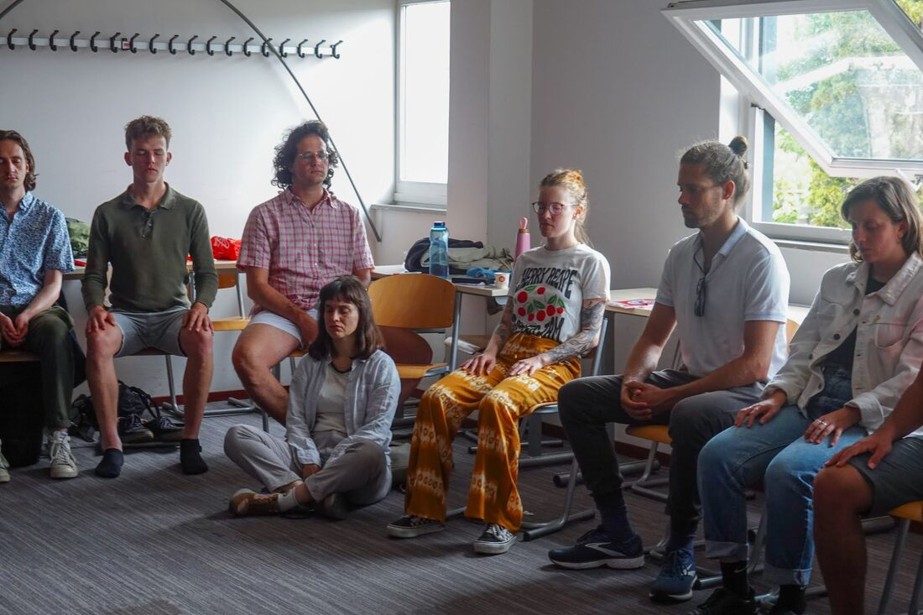
The summer school focused on hands-on exploration of participants’ experiential landscapes – they will explore methods of embodied thinking and research practices by applying various approaches of inquiring and reporting on lived experience, such as Micro-phenomenology, Thinking at the Edge, and meditative self-inquiry.
Students were also introduced to exploring the mind through movement and will got to know traditional embodied practices, such as the (Tibetan-Buddhist) monastic debate. Finally, the summer school offered an opportunity for dialogue between participants and trainers to explore the opportunities and challenges of interdisciplinary research.
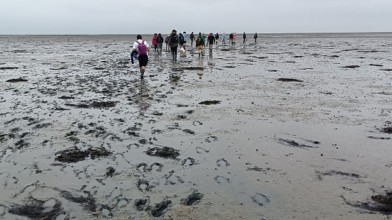
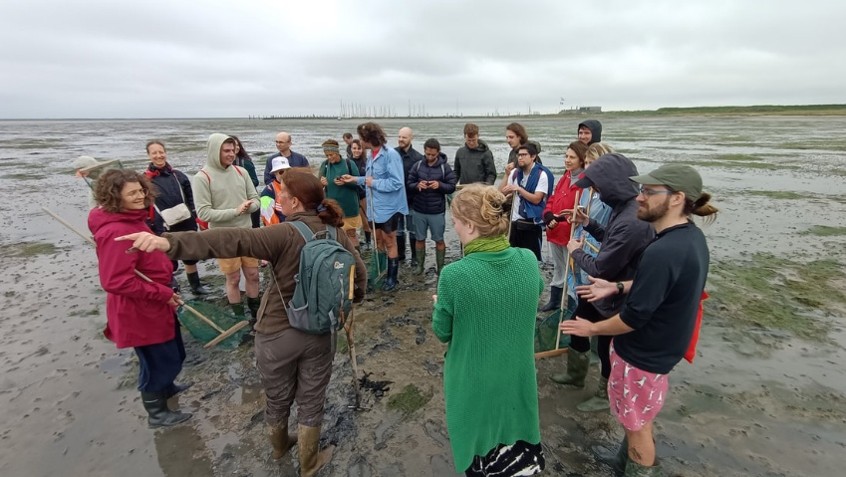
As part of the summer school was participant explored the Wadlopen near Pieterburen, Groningen. Part of the excursion was in-nature exercise lead by the summer school trainers.
Around 30 participants, both students and researchers, participated in the summer school, from all over Europe. The summer school teachers included the TECT trainees along with special guest teachers from Tibetian Monasteries.
The TECT Summer School 2022, Ljubljana
June 13th – 18th 2022
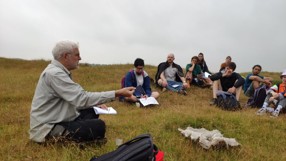
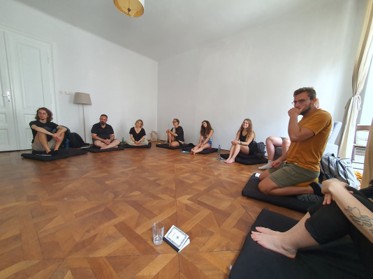
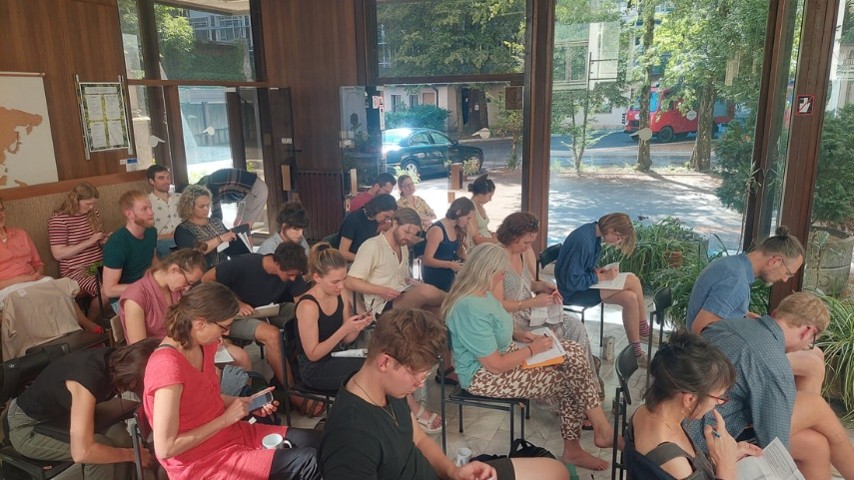
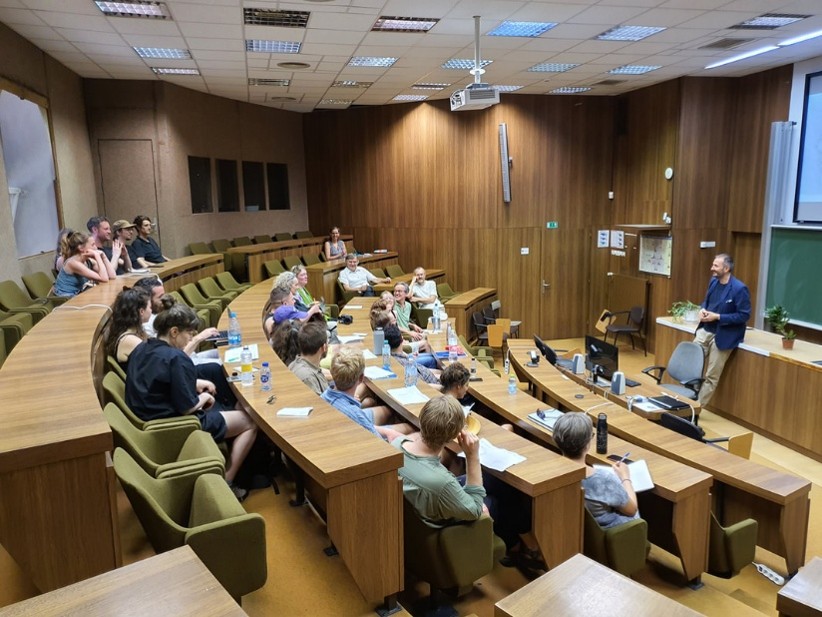
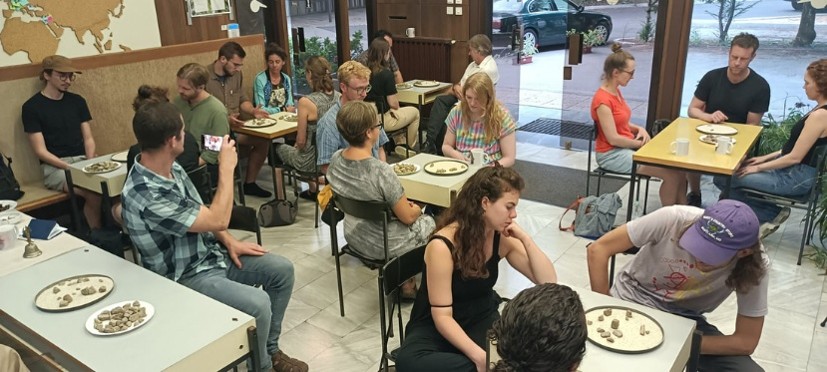
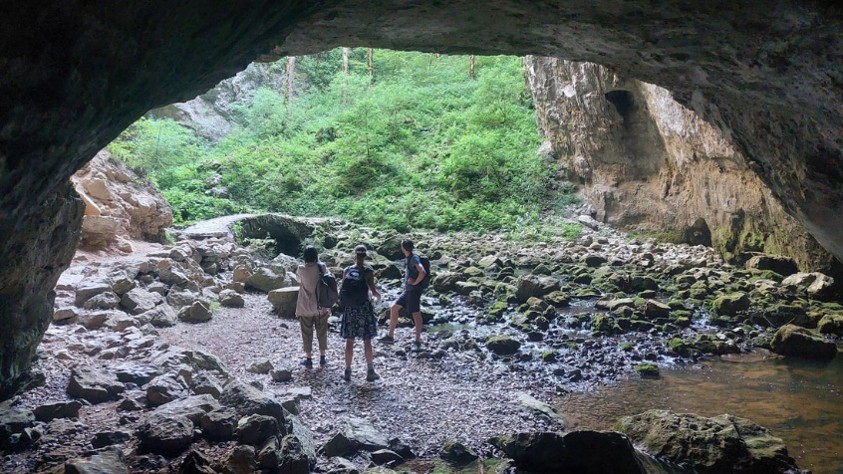
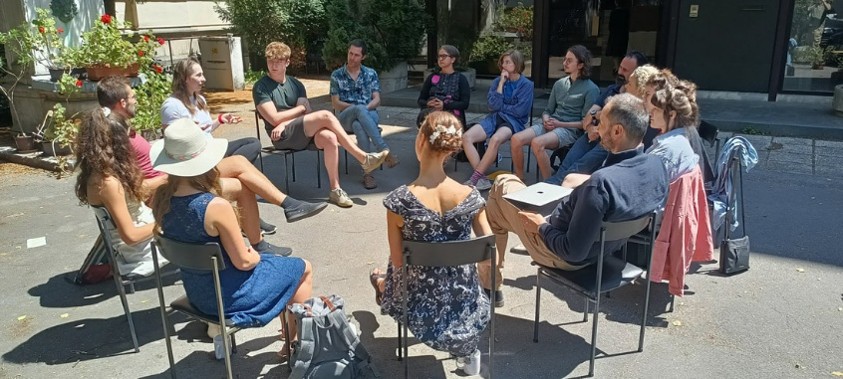
TECT’s second summer school, „Embodied Critical Thinking: Exploring Lived Experience“, took place at the University of Ljubljana from June 13th to 18th, in Slovenia. The summer school is part of a 15 ECT course hosted by the University of Ljubljana (consisting of a 12 week webinar in the spring, the summer school and an independent project in the fall) as part of the three year ERASMUS+ project „Training Embodied Critical Thinking“.
In the summer school, participants could choose between three different paths: „Thinking at the Edge“ (with profs. Donata Schoeller, Guðbjörg R. Johannesdottir and Sigríður Thorgeirsdóttir), „A Micro-phenomenological exploration of sensing our „right-place“ in the city and in nature“ (with profs. Claire Petitmengin and Ram Eisenberg) and „Observing experience – in meditation and in real life, in a dance between subjective and objective approaches“ (with profs. Urban Kordeš, Marieke van Vugt and Toma Strle).
Participants were introduced to methods of embodied critical thinking, got a training in the ECT methods and participated in outdoor exercises. Students and trainees came from the Erasmus+ partner universities in Groeningen, Ljubljana, Jena, Haifa and Iceland as well as from many other countries with a total of 25 people attending.
Micro-Phenomenology of Nature, France
October 18th – 21st 2021
Micro-phenomenology is a new scientific discipline that stems from an astonishing observation: a substantial proportion of what we live moment after moment, of what is thus the most intimate to us, escapes our awareness. For example, how does an emotion of joy or anger, a memory or an idea arise, evolve and disappear? We know very little about these experiences. Living an experience does not necessary mean being fully aware of it.
Among those experiences, one is particularly unrecognized: our relationship to what we call “nature”. What exactly are we experiencing when we get close to a tree, a river, when we cross a forest, meet an insect or a bird? Recent scientific studies show, with supporting figures, the positive effects of nature on our health, especially on our immune system. They also show that the loss of contact with nature, due to the extension of the urban way of life, creates a psychological suffering called “nature deficit disorder “. But the corresponding experience – what we feel when we are in contact with nature or when we are deprived of it – has been little studied, in the absence of suitable method, and remains ignored, including by ourselves.
As we are not in contact with these feelings, we represent ourselves as individuals whose inner space is separated from the environment by a rigid border. We perceive this environment as made up of objects intended to be categorized, controlled and consumed: plants and animals for our food, fossil energy for our trips, rocks and forest for our houses, seas and mountains for our leisure activities. This attitude is characteristic of our relationship to the world, that transforms any activity into an object that can be measured and consumed: education into ready to consume knowledge, health into medical treatments, leisure into ready-made shows and trips, which leads to catastrophic ecological and societal consequences.
Yet if we stop our run and take the time to connect with ourselves, a whole different picture emerges. When we allow to let ourselves be touched by the tree, the animal or the water, the rigid border that we usually perceive between ourselves and the outer world fades. We discover rhythms, sounds, colors that do not stop at this frontier, a subtle dimension where our ideas originate and which gives meaning to our words and acts. Being cut off from this vibrant dimension depresses and exhausts us, being connected with it makes us joyful and reanimates our lives.
The TECT Summer School 2021, Iceland
August 9th – 13th 2021
The Erasmus+ summer school, „Embodied Critical Thinking and the Environment“, took place at the University of Iceland from August 9th to August 13, 2021. The summer school is part of the larger course HSP912F: „Embodied critical thinking: theoretical foundations and practical applications“ at the Department of Philosophy at the University of Iceland, and is the second part of this three-step TECT-course (consisting of a 12 week webinar in the spring, the summer school and an independent project in the fall).
In the summer school, students/researchers were introduced to methods of embodied critical thinking. The participants got a training in the ECT methods and participated in outdoor exercises taking place in the lava fields of Reykjanes. The summer school teachers/trainers were Prof. Donata Schoeller, Prof. Sigríður Þorgeirsdóttir, Prof. Guðbjörg R. Jóhannesdóttir, Assist. Prof. Ram Eisenberg, Prof. Marieke van Vugt and Monika Lindner.
Students and trainees came from the Erasmus+ partner universities in Groeningen, Ljubljana, Jena, Haifa and Iceland as well as from many other countries with a total of 35 people attending.
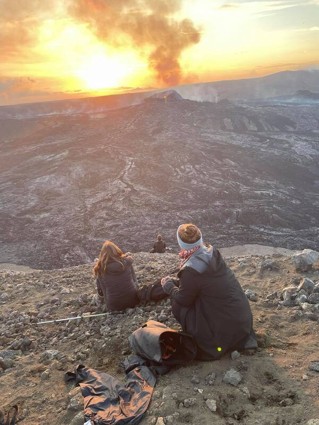
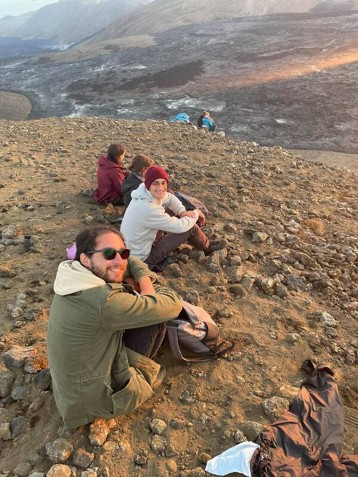
The weather during the summer school was wonderful by Icelandic standards, sunny days and warm, allowing group work to take place in the arena outside the building. One highlight of the week was an afternoon/evening excursion to the volcano at Fagradalsfjall with a glorious sunset as a backdrop to the active volcano and the burning lava flowing out of the crater.